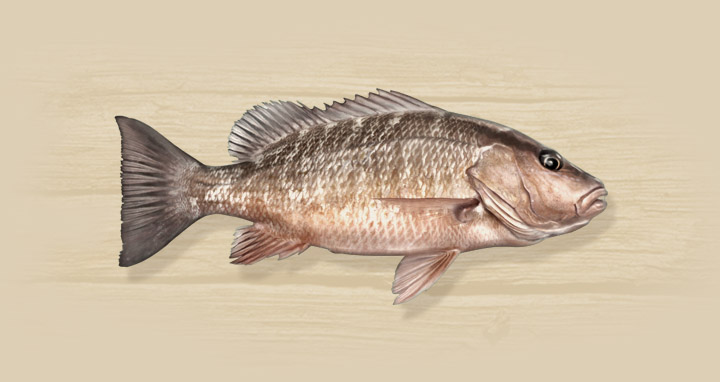
Gray Snapper(Lutjanus griseus)
Quick Facts
- Other Names: Mangrove, Mango, Grovers, Dips
- Size Range: The juveniles inshore are commonly less than 3 pounds, and offshore they are normally 3 to 15 pounds.
- Native Species?: Yes
- Food Value: Excellent delicate white meat and very sought after.
State Record
- Louisiana State Record: 18.63lbs
- State Record Date: 7/1/2015
- State Record Holder Tim Champagne
Gray snapper are also commonly known as mangrove snapper. They have a gray to dark brown body with reddish orange tinge that becomes much more prominent upon death. They may have a dark horizontal band across the eye, but this comes and goes. Two prominent canine teeth are in the front of the upper jaw; they will thrust these out and “bite” you if you get your fingers too close.
Juvenile gray snappers live in mangrove roots, grass beds and around any structures found in inshore waters. They move to offshore structures as adults.
Gray snapper can be one of the trickiest fish to catch. They can be very visually weary of terminal tackle. Live and dead baits on the bottom are most common, but chumming and drifting baits can be effective, too. The trick is using as light of tackle as possible to get the bitebut heavy enough to force them out of the structure once hooked.
Gray Snapper Rules and Regulations
| Size Limit : | 12” min total length |
| Seasons : | No Closed Season |
There are Currently No Videos to Display
Related Fishing Methods
Bottom Fishing
Bottom fishing is normally about fishing bottom structures in order to target benthic or bottom dwelling fish. There are a wide variety of techniques, but the common element is the targeting of species who dwell around or hide in natural and man-made structures. Fish like grouper, snapper, amberjack and catfish would be considered bottom fish. It is very popular amongst anglers and success is often determined by the fishermen's ability to crank a fish away from the structure before the fish can duck into it and cut the line. Anchoring or drifting the boat over the structure is key to having success. There are many versions, and many of the bottom fish are prized eating.
Chunking
The use of chunks of cut bait, usually fish, to attract game fish to the boat. The hook is then placed in one of the chunks and tossed out to free-line down. Also could be considered chumming, but the size of the pieces are bigger and gives the fish something to start feeding on.
Dead Bait
Dead bait consists of many different types of bait that is no longer alive. Dead bait is still attractive to many fish as they are normally feeding by smell and dead bait is the ticket for smell. Fresh cut fish, dead shrimp, half crab, shucked clam, cut squid and all popular examples of bait that will catch a wide variety of fish. Many sport fish that are predators, will gladly take the opportunity to slurp up a fresh dead bait. A redfish is equally happy to chase down a baitfish or slurp up a dead shrimp on the bottom. Dead bait has the benefit is being easy to obtain, maintain and transport, as opposed to live bait which takes livewells, quality water control and can be harder to obtain.
Live Bait
Live bait is a term given to many different types of fish, crustaceans, insects and worms that are popular food items for fish and used by fishermen for bait. There are many benefits to live bait as well as a few cons. The pros normally out weigh the negatives, and live bait is widely used. The biggest benefit for fishermen is that they are using the real thing and often puts a fish's guard down. Small fish, crabs, shrimp, clams, crickets and the good ole earthworm are all used to entice a fish to the hook. The only negatives to live bait is just that, keeping it alive. Sometimes catching it can be a challenge, as only some species can be bought as live bait. No matter how you get it, live bait is a great way to target many types of fish.
